About Us
The Tode Rekishi Kenkyukai (The Karate Historical Research Group) is a group dedicated to the preservation and research of karate, primarily but not exclusively, through the study of kata.
With the accelerated development of sports karate, many of the original kata, and their purpose as a teaching methodology, are in danger of being forgotten completely. While it’s true kata has gone through continual changes from their inception onwards throughout history, today’s emphasis on competition form rather than function, poses a real threat of losing the very purpose of why kata was developed in the first place.
With the accelerated development of sports karate, many of the original kata, and their purpose as a teaching methodology, are in danger of being forgotten completely. While it’s true kata has gone through continual changes from their inception onwards throughout history, today’s emphasis on competition form rather than function, poses a real threat of losing the very purpose of why kata was developed in the first place.
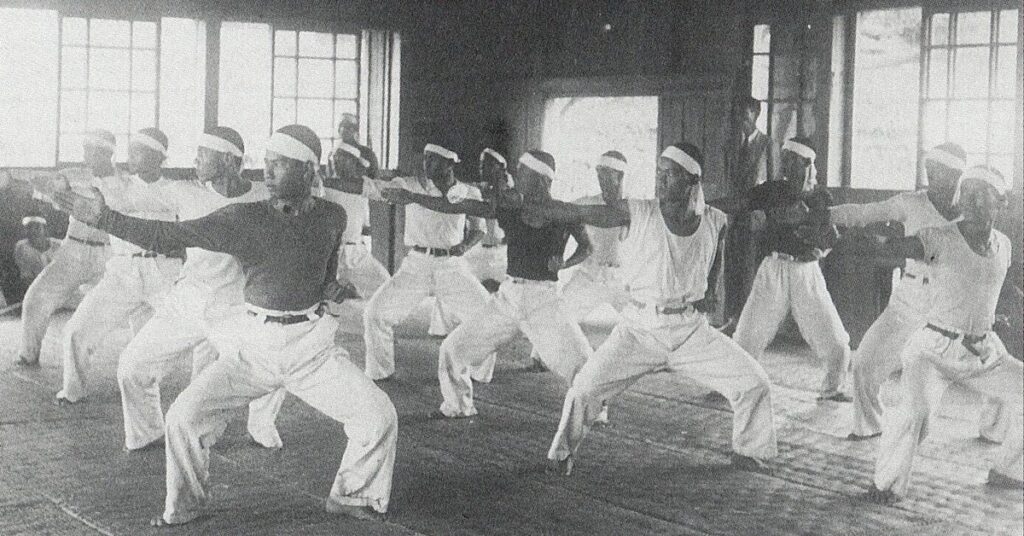
karate was first and foremost a self-defence art. Looking through any historical texts on karate written by many of the greatest karate masters of the early 20th century, it’s clear that karate was presented as a system of self-protection. Aligned to kata were strikes aimed at anatomical weak points, joint locks and throws. Much of which had disappeared.
It is the objective of this study group to organise seminars to research, preserve and better understand the original function of karate as a self-protection system. Don’t confuse what we do with the contemporary bunkai revisionist movement. Our focus is primarily on trying to understand the underlying principles of traditional, classical
Karate kata.
Based in Scotland, with seminars & study group sessions primarily in Perth, we are predominantly a karate organisation, but our research and practice inevitably takes us into other martial arts and the research into common concepts across other systems.
We organise seminars, workshop, courses and group training sessions on various aspects of Karate through the study of traditional kata including Kyusho Jitsu, Atemi Waza, Tuite Waza, Kansetsu Waza and other techniques that have been displaced by the increase of sports in the practice of martial arts.
We are an open study group, meaning we welcome participants from across all styles of karate and from other martial arts, totally free of politics. We regularly run seminars by instructors from various martial arts systems, who are willing to teach openly, many of the specialties of their systems. It’s through the study of different perspectives across martial arts, that we are better to understand the underlying principles upon which the old masters created karate kata.
As a predominantly karate organisation, we put kata at the centre of what we research and practice.
We use the standard Genki or base model for teaching kata. Genki refers to form visible in the kata, which is the blueprint for the original form which the origin of the kata is based.
The Genki model introduces the following four separate but interconnected elements of kata.
Bunkai – means ‘disassembly‘ or ‘to take apart and analyse‘.
It refers to the analysis of the various movements from which the kata is composed, as interpreted by individual schools or systems.
Bunkai is often confused with the application of the kata. Bunkai is not the application of kata.
Breathing, stance, posture, body shifting are all part of the study of bunkai. By breaking down and analysing kata in this way, we hope to gain a deeper understanding of the principles involved.
Oyo – means ‘practical application‘.
Oyo moves beyond the primary pattern of the form by beginning to study how the basic concepts and principles of kata can be applied to different scenarios. It is within Oyo that the application of kata begins to be studied.
Henka – Means ‘variation‘ or ‘change‘.
The execution of kata and your expression will never look the same as others, despite using the same basic model emphasised in the form.
Henka allows us to take a basic principle identified in the analysis and application stage of learning kata and apply those principles to situations outside of the obvious interpretation.
The emphases within the fundamental movement, the force applied to the individual techniques, the ability to coordinate the movement to
variations in attack & defence scenarios, the size of the attackers, the differences in the rhythm of the attack and many other aspects of the effect of how different individuals execute the pattern of the form, can never be the same.
Henka begins to move the consciousness outside the restrictions imposed by the framework which creates the form and opens up the possibilities of expressing the principles taught within the kata to non-compliant, dynamic situations.
Kakushi – Means ‘hidden‘.
Each kata includes two parts. Omote (the surface or visible part) and Okuden (the hidden part).
Kakushi deals with techniques which, although always present in the Genki model, are often overlooked, because they are not obvious at a superficial level.
Kata, at least within the context of karate, were originally handed down by oral tradition (kuden), so many of the hidden techniques were never recorded.
It often takes an instructor from a different style of karate, or another martial art completely to that which an individual practices, to make these hidden techniques obvious. It’s important to understand that Kakushi refers to ‘hidden’ but not ‘secret’. There are no secret techniques in karate. Only techniques that are not superficially obvious.
There is another expression often used within the Genki model which is referred to as Bunseki.
Bunseki relates to all 4 elements of kata expressed within the Genki model.
Buneski means ‘analysis,’ similar to bunkai, but refers to a more complicated or deeper technical analysis than that to which bunkai implies.
Buneski can be described as a technical analysis of a subset of principles identified within the bunkai of kata.
Kata is often referred to as the heart of karate, the core of all karate skills. The true essence of training lies in developing the ability to use the techniques effectively, not just performing them as a choreographed form.
It is the objective of this study group to organise seminars to research, preserve and better understand the original function of karate as a self-protection system. Don’t confuse what we do with the contemporary bunkai revisionist movement. Our focus is primarily on trying to understand the underlying principles of traditional, classical
Karate kata.
Based in Scotland, with seminars & study group sessions primarily in Perth, we are predominantly a karate organisation, but our research and practice inevitably takes us into other martial arts and the research into common concepts across other systems.
We organise seminars, workshop, courses and group training sessions on various aspects of Karate through the study of traditional kata including Kyusho Jitsu, Atemi Waza, Tuite Waza, Kansetsu Waza and other techniques that have been displaced by the increase of sports in the practice of martial arts.
We are an open study group, meaning we welcome participants from across all styles of karate and from other martial arts, totally free of politics. We regularly run seminars by instructors from various martial arts systems, who are willing to teach openly, many of the specialties of their systems. It’s through the study of different perspectives across martial arts, that we are better to understand the underlying principles upon which the old masters created karate kata.
As a predominantly karate organisation, we put kata at the centre of what we research and practice.
We use the standard Genki or base model for teaching kata. Genki refers to form visible in the kata, which is the blueprint for the original form which the origin of the kata is based.
The Genki model introduces the following four separate but interconnected elements of kata.
- Bunkai
- Oyo
- Henka
- Kakushi
Bunkai – means ‘disassembly‘ or ‘to take apart and analyse‘.
It refers to the analysis of the various movements from which the kata is composed, as interpreted by individual schools or systems.
Bunkai is often confused with the application of the kata. Bunkai is not the application of kata.
Breathing, stance, posture, body shifting are all part of the study of bunkai. By breaking down and analysing kata in this way, we hope to gain a deeper understanding of the principles involved.
Oyo – means ‘practical application‘.
Oyo moves beyond the primary pattern of the form by beginning to study how the basic concepts and principles of kata can be applied to different scenarios. It is within Oyo that the application of kata begins to be studied.
Henka – Means ‘variation‘ or ‘change‘.
The execution of kata and your expression will never look the same as others, despite using the same basic model emphasised in the form.
Henka allows us to take a basic principle identified in the analysis and application stage of learning kata and apply those principles to situations outside of the obvious interpretation.
The emphases within the fundamental movement, the force applied to the individual techniques, the ability to coordinate the movement to
variations in attack & defence scenarios, the size of the attackers, the differences in the rhythm of the attack and many other aspects of the effect of how different individuals execute the pattern of the form, can never be the same.
Henka begins to move the consciousness outside the restrictions imposed by the framework which creates the form and opens up the possibilities of expressing the principles taught within the kata to non-compliant, dynamic situations.
Kakushi – Means ‘hidden‘.
Each kata includes two parts. Omote (the surface or visible part) and Okuden (the hidden part).
Kakushi deals with techniques which, although always present in the Genki model, are often overlooked, because they are not obvious at a superficial level.
Kata, at least within the context of karate, were originally handed down by oral tradition (kuden), so many of the hidden techniques were never recorded.
It often takes an instructor from a different style of karate, or another martial art completely to that which an individual practices, to make these hidden techniques obvious. It’s important to understand that Kakushi refers to ‘hidden’ but not ‘secret’. There are no secret techniques in karate. Only techniques that are not superficially obvious.
There is another expression often used within the Genki model which is referred to as Bunseki.
Bunseki relates to all 4 elements of kata expressed within the Genki model.
Buneski means ‘analysis,’ similar to bunkai, but refers to a more complicated or deeper technical analysis than that to which bunkai implies.
Buneski can be described as a technical analysis of a subset of principles identified within the bunkai of kata.
Kata is often referred to as the heart of karate, the core of all karate skills. The true essence of training lies in developing the ability to use the techniques effectively, not just performing them as a choreographed form.
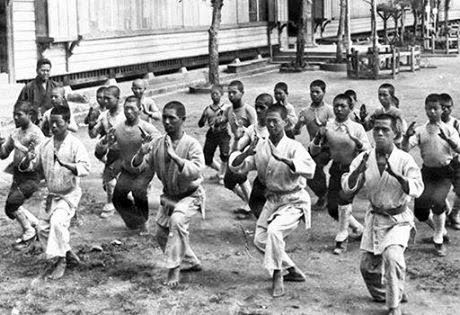
The Tode Rekishi Kenkyukai welcomes practitioners, instructors, and martial arts enthusiasts from all backgrounds.
Whether you are interested in joining a study session, attending a seminar, or contributing your knowledge to our research, we would love to hear from you.

